
Eleventh Circuit: Machine guns not protected in Second Amendment
The U.S. Court of Appeals for the Eleventh Circuit has ruled that machine guns are not protected under the Second Amendment, citing the late Supreme Court Justice Antonin Scalia’s opinion in District of Columbia v. Heller. And the judge who authored the opinion is on President Donald Trump's short list for the U.S. Supreme Court.
The court held that machine guns are dangerous and unusual weapons and can be banned under the U.S. Constitution.
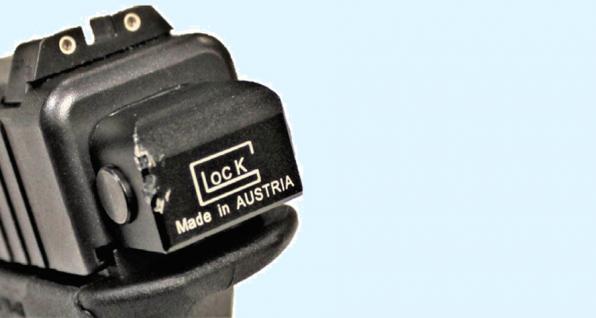
The case, United States v. Maxon Alsenat, involved the conviction of Maxon Alsenat under 18 U.S.C. § 922(o)(1), which prohibits the possession of a machine gun (including conversion devices). Mr. Alsenat was indicted in the Southern District of Florida for knowingly possessing a machine-gun conversion device (MCD). In this case, police claimed that he possessed three "Glock" switches, which they say he tried to sell to an undercover officer. He moved to dismiss the indictment on Second Amendment grounds. The district court denied the motion, finding that machine guns are not in common use and are dangerous and unusual. The court also ruled that conversion devices are not “arms.” In the court’s view, MCDs are “accessories” and therefore not protected by the Second Amendment.
Midterms are here: 2026 BFA-PAC Grades and Endorsements for the Ohio Primary
Mr. Alsenat pleaded guilty to the charges, admitting that he possessed the contraband, but preserved his right to appeal on constitutional grounds. He was sentenced to 24 months in prison and three years of supervised release. He appealed to the Eleventh Circuit, arguing that under the Bruen standard, the government could not ban an adult with no felony convictions from owning machine guns and machine-gun conversion devices.
The court rejected the challenge and affirmed his conviction.
The opinion, authored by Chief Judge William Pryor and joined by Circuit Judges Brasher and Abudu, relied heavily on District of Columbia v. Heller.
Chief Judge Pryor, who is on President Trump’s short list for the next Supreme Court vacancy, reasoned that the Second Amendment protects weapons “typically possessed by law-abiding citizens for lawful purposes” but does not extend to “dangerous and unusual weapons.” He cited the Heller opinion, which explicitly described machine guns (e.g., M-16 rifles) as the type of arms that could be banned and stated it would be “startling” if federal restrictions on them were unconstitutional.
In another case: BFA and partners ask court to strike down NFA rules on suppressors, short-barreled rifles
Mr. Alsenat argued that the machine-gun ban fails the New York State Rifle & Pistol Ass’n v. Bruen analysis and United States v. Rahimi. His arguments did not persuade the court. According to Chief Judge Pryor, neither Bruen nor Rahimi changed Heller. Rather, both cases reaffirmed that the amendment protects weapons in common use and permits regulation of dangerous and unusual ones.
Alsenat’s lack of a felony record did not change the outcome. According to the court, the ban is constitutional as applied to him, and his “quasi-facial” challenge failed because the statute has valid applications. There were no concurrences or dissents in the case, meaning Alsenat lost by a 3-0 margin.
Mr. Alsenat may request an en banc hearing, in which the full bench would hear the case, but with Chief Judge Pryor authoring the opinion, his chances of a different outcome are minimal. He could also seek a writ of certiorari from the U.S. Supreme Court, though SCOTUS granting cert would be a long shot.
- 645 reads