
Ohio House must act on suppressor reform (SB 214) now
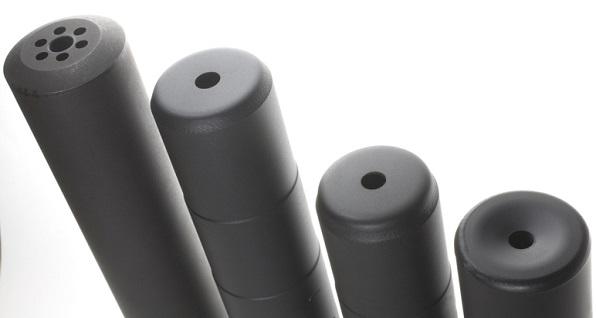
Ohio’s Senate has taken clear, decisive action on suppressor reform, but the House has not finished the job. Senate Bill 214 passed the Senate by a decisive 31–1 vote, yet months later, the bill remains stalled in the House Public Safety Committee. SB 214 would remove firearm mufflers and suppressors from Ohio’s legal classification of “dangerous ordnance.”
This is not a personal attack on House Speaker Matt Huffman or legislative leadership. Speaker Huffman has a proven track record of strong pro-gun leadership, consistently advancing Second Amendment priorities and defending the constitutional rights of Ohio gun owners throughout his tenure. Rather, this is a demand for basic legislative accountability and a recognition that a rare reform opportunity must not be taken for granted. A bill sitting in committee changes nothing, a vague promise to consider it later provides zero legal certainty, and an unverified assumption that Gov. Mike DeWine will sign it is a dangerous gamble.
DeWine’s track record on the Second Amendment has been lukewarm at best.
Throughout his decades in public office, from his tenure in the U.S. Senate to the governor’s mansion, DeWine has earned a reputation among gun owners as an unreliable defender of constitutional rights. During his time in Washington, DeWine’s anti-gun voting record earned him abysmal ratings from grassroots firearm organizations, including an “F” rating from Buckeye Firearms Association (BFA) and the NRA. That record alienated Ohio’s firearms community and played a pivotal role in his 2006 U.S. Senate defeat to Sherrod Brown, as thousands of constitutional conservatives simply refused to rally behind a candidate who failed to defend their fundamental rights.
As governor, DeWine doubled down on this anti-gun impulse when he introduced his “STRONG Ohio” legislative package (S.B. 221). Driven by executive overreach, DeWine’s proposal pushed for “safety protection orders” — similar to red-flag laws — and state-level initiatives aimed at restricting private gun sales. These proposals directly threatened due process rights and sought to penalize law-abiding gun owners instead of targeting actual criminals. Though the General Assembly wisely rejected his infringements, DeWine demonstrated that his instinct is to look for ways to restrict firearm rights rather than expand them.
Waiting leads to unintended consequences
The stakes in Ohio extend directly to the federal level, as we soon will see by allowing Democrat Sherrod Brown back in the U.S. Senate following his defeat of Jon Husted on Nov. 3. Brown’s long legislative record has consistently aligned with anti-gun interest groups and federal gun-control agendas. Restoring constitutional balance in Washington requires electing a senator who will defend the Second Amendment rather than vote to restrict it. That did not happen.
Supporters of Senate Bill 214, led by bill sponsor Sen. Kyle Koehler, have made a practical argument that suppressors are primarily noise-reduction safety tools and should not be classified under state law alongside explosives or fully automatic weapons. Purchasers would remain fully subject to applicable federal requirements, but updating state law eliminates unnecessary state felony exposure for law-abiding gun owners. That distinction matters. SB 214 updates state law to ensure lawful conduct is not needlessly criminalized, and the stakes are serious enough to warrant a direct legislative decision.
If amendments are necessary, House leadership should publish them. If additional testimony is needed, schedule it. If there are remaining objections, identify them publicly and then bring the proposal to a floor vote.
Passing the House is a critical step, but it does not enact law on its own. We must put the pressure directly where it belongs: DeWine must state publicly, without hesitation or political double-talk, whether he will sign legislation removing suppressors from Ohio’s dangerous ordnance classification. DeWine’s decision on this bill will permanently cement his legacy regarding the protection of our Second Amendment civil rights and the constitutional freedoms of Ohio residents he swore an oath to defend. Gun owners are tired of passive leadership that forces responsible citizens to navigate legal minefields just to protect their hearing and exercise their fundamental rights.
If DeWine supports the measure, stating so publicly will clarify the path forward and prove to gun owners that he will not stand in the way of constitutional reform. If he has objections, lawmakers and the public deserve to know what they are while there is still time to address them in the legislative process. Ohioans seeking clarity from the administration can voice their stance by contacting the governor’s office directly at 614-644-4357 or by submitting a message through the official web portal at governor.ohio.gov/contact.
It's about our rights over the long term
For every law-abiding gun owner in Ohio, this is about far more than legislative mechanics. It is about the sacred, nonnegotiable right to defend our families without being treated like criminals by our own government. We have watched politicians offer warm promises while leaving constitutional freedoms hanging in the balance.
We cannot afford to leave our Second Amendment heritage to chance or rely on temporary allies. Vivek Ramaswamy stood as an unapologetic champion who refuses to compromise on the right to keep and bear arms. But he lost. Amy Acton, an anti-gun Moms Demand Action endorsee, won and will be our next governor.
Speaker Huffman and House leadership should establish a firm timeline to report SB 214 out of committee. Gov. DeWine should publicly clarify whether he will sign the bill upon passage.
“Later” is not a legislative accomplishment.
Sean Maloney is a criminal defense attorney, cofounder of Second Call Defense, and an NRA-certified firearms instructor. He also serves as legal counsel for Buckeye Firearms Association. Republished with permission from AmmoLand.
- 70 reads